Political Theory
Islamic Political Thought is treated as a living analytical framework, not only as intellectual heritage.
Registration: March 27 - June 20, 2026
A graduate program at FISIP UIN Sunan Gunung Djati Bandung that places Islamic Political Thought at the center of inquiry, connecting Islamic intellectual traditions with contemporary political science, public policy, diplomacy, peace, and digital politics.
48
Credits
4
Semesters
2030
Southeast Asia Reference
Program Vision
A Southeast Asian reference for Islamic Political Thought.
A leading reference by 2030, distinguished in research, competitive in publication, and innovative in policy contribution.
Signature Focus
Islamic Governance, Policy and Digital Politics Lab
Welcome Message from the Program Chair

Welcome to the Master's Program in Islamic Political Thought at the Faculty of Social and Political Sciences, UIN Sunan Gunung Djati Bandung. This academic community is developed as a space for learning, research, and public engagement at the meeting point of Islamic intellectual traditions and contemporary political science.
Islamic Political Thought is treated not only as historical heritage, but as a living and rigorous field of inquiry. Students are guided to read texts methodologically, engage global political theory, develop accountable research, and examine democracy, human rights, gender equality, radicalism, peace, diplomacy, and digital Islamic politics with intellectual responsibility.
Asep Muhamad Iqbal, Ph.D.
Chair of Master's Program in Islamic Political Thought, FISIP UIN Sunan Gunung Djati Bandung
Program at a Glance
The program understands Islamic politics as a rich and diverse reality, covering ideas, values, practices, institutions, and power relations across historical trajectories and contemporary contexts. It positions Islamic Political Thought as part of Political Theory and Comparative Political Theory in Political Science.
Islamic Political Thought is treated as a living analytical framework, not only as intellectual heritage.
Combines political science, sociology, philosophy, law, Islamic studies, and international relations.
Debates, case studies, policy simulations, collaborative projects, methods labs, and fieldwork.
Builds research, publication, policy communication, and public engagement competencies.
Brief History
October 14, 2024: the establishment proposal was presented before Commission III of the Senate of UIN Sunan Gunung Djati Bandung.
October 23, 2024: the proposal was approved by the University Senate in its plenary session.
December 15-17, 2024: field assessment was conducted by assessors from the Ministry of Religious Affairs of the Republic of Indonesia.
July 28, 2025: the operational permit was granted through Decree of the Minister of Religious Affairs No. 883 of 2025.
February 6, 2026: Asep Muhamad Iqbal, Ph.D. was inaugurated as Program Chair by Rector Prof. Rosihon Anwar.
March 27-June 20, 2026: student applications opened for classes beginning in the 2026-2027 academic year.
A graduate program dedicated to the critical, in-depth, and contextual study of Islam, politics, and public life through Islamic Political Thought, modern political theory, and social scientific approaches.
Political ideas and values, institutions and governance, social-political practices, contemporary dynamics, democracy, human rights, peace, diplomacy, and digital politics.
Prof. Ahmad Ali Nurdin, Ph.D. Islamic Politics
Asep Muhamad Iqbal, Ph.D. Religion and Politics
Dr. Ridwan Rosdiawan Islamic Thought
Dr. Bukhori Religious Studies
Dr. Gina Giftia Azmiana Delilah Islamic Thought
Program ChairAsep Muhamad Iqbal, Ph.D.
Administration & PromotionImpiani, S.Hum., M.Si.
Data & IT SupportYosef Anwar Fauzan, S.T.
Islamic Governance, Policy and Digital Politics Lab (GPD2 Lab)
Academic seminar rooms
Digital research resources
Library collections in political science and Islamic studies
Research collaboration platforms
Part-time and visiting lecturer networks
Academics & Admissions
Students connect Islamic normative sources, modern political theory, interdisciplinary methods, and applied policy engagement through active, comparative, and output-oriented learning.
Connects the Qur'an, Sunnah, and the wider Islamic intellectual tradition with modern and contemporary political theory and methodology.
Engages political science, sociology, philosophy, law, international relations, and comparisons with global political traditions.
Uses debates, simulations, case studies, collaborative projects, methods labs, internships, and fieldwork to bridge theory and practice.
Admissions 2026
Registration Period
March 27 - June 20, 2026
Classes Begin
Academic Year 2026-2027
The program is open to bachelor's degree graduates and professionals with a strong interest in Islam, politics, governance, public policy, diplomacy, research, and public life.
Academic Calendar
Odd Semester runs from September to December. Even Semester runs from February to June, following the official academic calendar of UIN Sunan Gunung Djati Bandung.
48-credit Curriculum
Ontological, epistemological, and axiological dimensions are designed to strengthen mastery of ideas, methods, and policy contribution.
Semester 1
Classical canon, hermeneutics, Islamic political ethics, research design, and academic writing.
Semester 2
Modern-contemporary thought, diversity of traditions, interdisciplinary approaches, and global theoretical dialogue.
Semester 3
Research methods, Islamic public policy analysis, diplomacy, conflict, peace, internship/fieldwork, and specialization topics.
Semester 4
Master's thesis, thesis seminar, publication clinic, and journal article or policy report outputs.
Tuition Fees
Tuition fee information follows official UIN Sunan Gunung Djati Bandung policies. Scholarships and financial assistance may be available through university programs or external institutions.
Graduate Profile
Graduates are prepared with theoretical depth, methodological competence, scholarly integrity, and policy communication skills for national and international professional settings.
Analyzes public policy, governance, religion-state relations, democracy, and contemporary Islamic political dynamics.
Builds dialogue and communicates political, Islamic, and international issues in global contexts.
Designs, conducts, and publishes research on ideas, movements, institutions, and practices of Islamic politics.
Provides strategic input and recommendations on Islamic politics, policy, and institutional development.
Pursues teaching, research, and community engagement in Islamic Political Thought, politics, and social sciences.
Research & Publications
Research places Islamic Political Thought at the center of analysis, connects Islamic intellectual traditions with contemporary political questions, and encourages theoretically strong work that remains relevant to public life and policy.

Classical, modern, and contemporary canons; authority, legitimacy, law, governance, and justice.
Shura, 'adl, amanah, maslahah, and hisbah as analytical categories for modern governance.
Democracy, human rights, gender, radicalism, conflict, peace, diplomacy, and political reform.
Digital religious authority, activism, disinformation, polarization, Islamic political mobilization, and platform governance.
Comparative research across schools of thought, Muslim-majority countries, regions, and broader intellectual traditions.
Policy analysis, international relations, Islamic political movements, governance, conflict, and peace processes.
Phase 1
Strengthening intellectual foundations and mapping the research agenda.
Phase 2
Methodological strengthening and comparative studies across schools, countries, regions, and traditions.
Phase 3
Deepening work on contemporary issues and global problems.
Phase 4
Applied research, policy, diplomacy, and public engagement.
Phase 5
Developing Digital Islamic Politics as a flagship area.
Phase 6
Consolidation toward regional reference in Southeast Asia.
Research Centre
GPD2 Lab serves as a space for research, applied learning, and dissemination that connects Islamic Political Thought with governance, public ethics, policy analysis, diplomacy simulations, and digital politics.
Theses and journal articles
Working papers and research reports
Policy briefs and policy memos
Conferences and proceedings
Books and book chapters
Popular essays and media writing
Planned Journal
Journal of Islamic Political Thought and Governance
Partnerships
The program develops academic and policy partnerships to strengthen learning quality, expand scholarly networks, and enhance contribution to knowledge, public policy, and public life.
Theory, history, tradition, and dialogue with global political theory.
Public policy, accountability, participation, and public ethics.
The Muslim world, international relations, and cross-national cooperation.
Conflict resolution, mediation, security, and sustainable public life.
Joint research, collaborative publications, policy development, seminars, conferences, and academic forums.
Political science associations, Islamic studies networks, governance centers, think tanks, and regional research consortia.
Students & Alumni
Students come from diverse academic and professional backgrounds, united by a strong interest in Islam, politics, and public life. Alumni networks are maintained through tracer studies, email correspondence, newsletters, and WhatsApp groups.
Seminars, conferences, and guest lectures
Reading forums and academic discussions
Research presentations, writing training, and publications
Thesis supervision, research workshops, and writing clinics
Academic internships, policy dialogues, and partner collaboration
Alumni profiles, career information, and professional networks
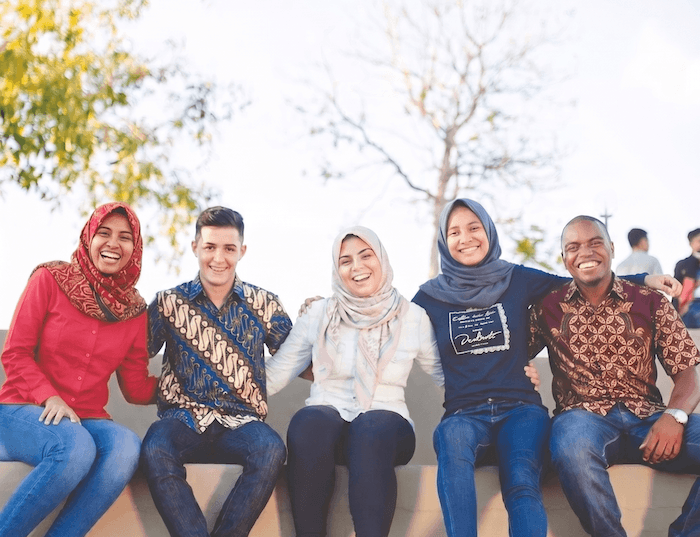
Latest News & Events
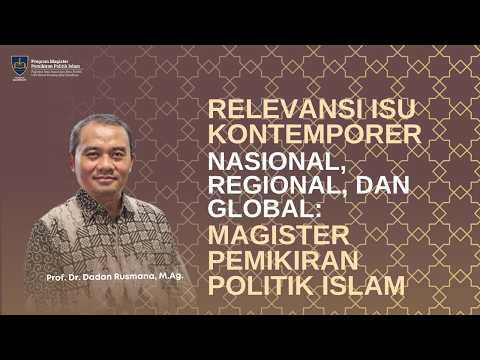
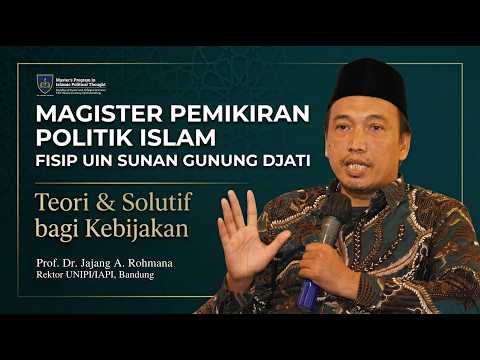
This space documents seminars, public lectures, writing workshops, policy and diplomacy discussions, student achievements, partnerships, and academic documentation produced by or related to the program.
Watch on YouTube
Watch on YouTube
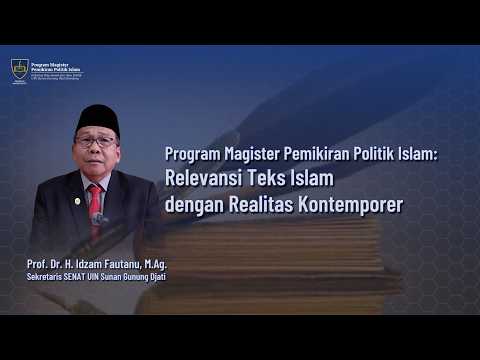
Watch on YouTube
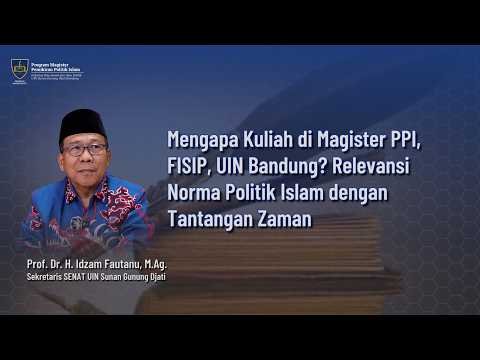
Watch on YouTube
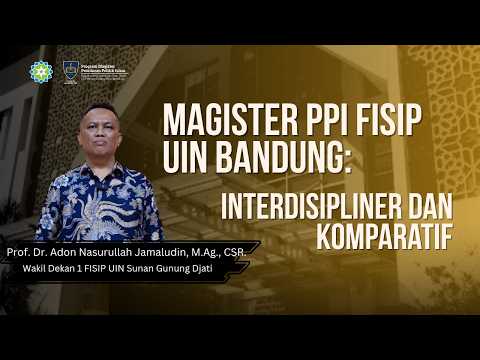
Watch on YouTube
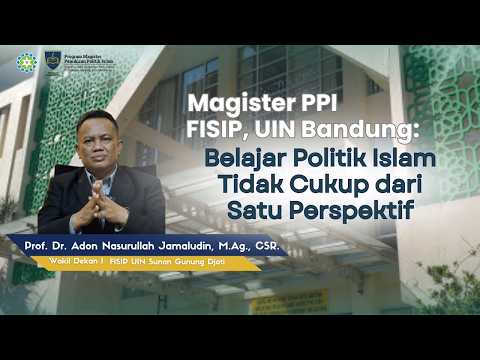
Watch on YouTube
Watch on YouTube
Watch on YouTube
Apply Now
If you want to deepen the study of Islam and politics in a critical, contextual, and policy-relevant way, the Master's Program in Islamic Political Thought opens a learning space for you.
Program Master's Program in Islamic Political Thought, Faculty of Social and Political Sciences, UIN Sunan Gunung Djati Bandung
Email [email protected]
Phone To be added
Office Address Gedung FISIP 1, 1st Floor, Jalan A.H. Nasution No. 105, Cibiru, Bandung City, West Java, Indonesia 40614